
Teen Patti vs 3 Card Poker: What Changes When You Play?
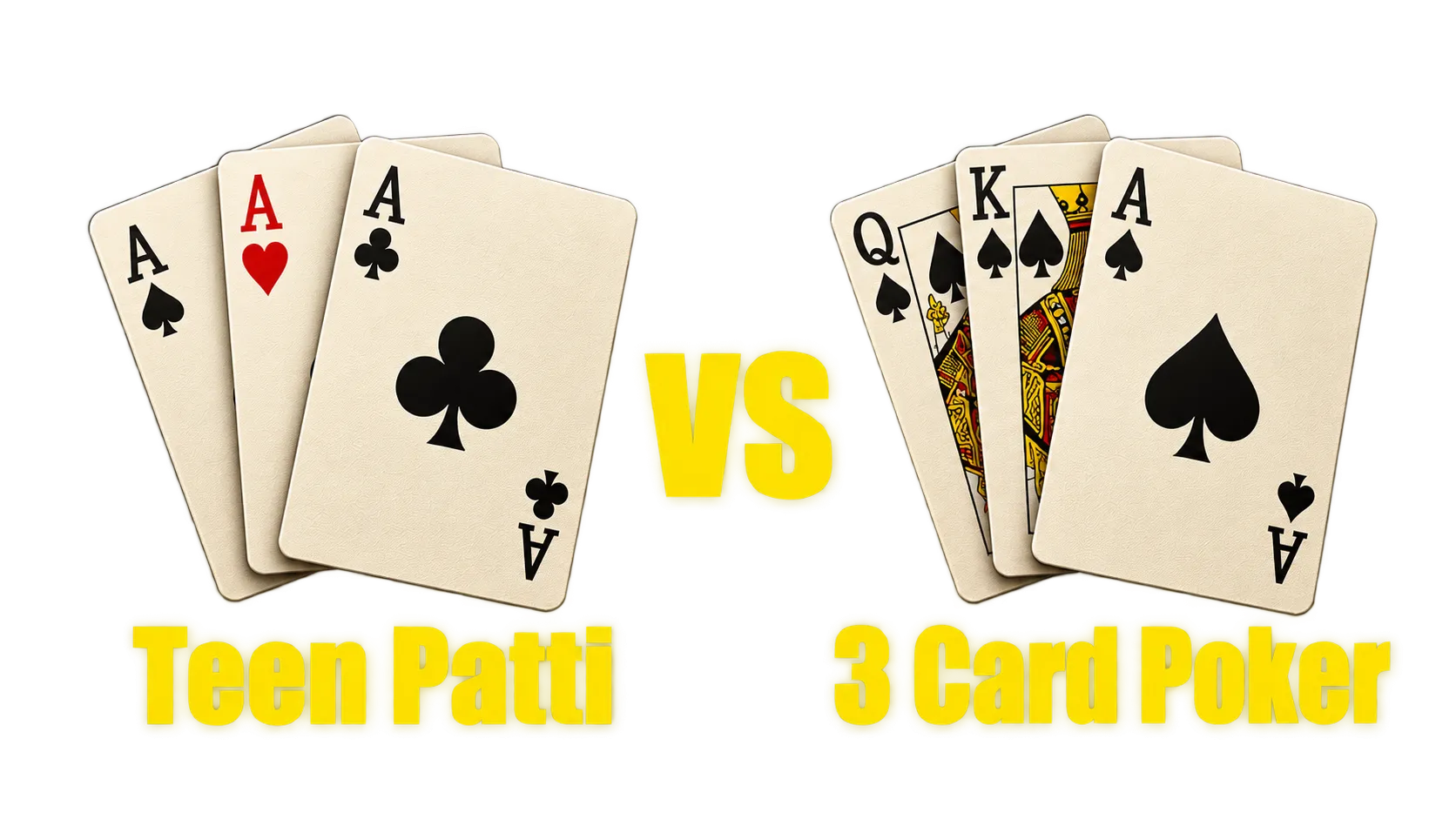
The key difference in teen patti vs 3 card poker is who you compete against: other participants in classic Teen Patti, or the dealer in standard casino Three Card Poker. Both use three cards, but their betting structures and strongest combinations differ.
This guide compares the traditional Indian game with standard Ante-and-Play casino rules. You will learn how a round works, which hands win, how ties are handled and where strategy matters. Casino adaptations carrying the Teen Patti name may follow different rules, so check the specific version before playing. Familiar card symbols do not mean familiar betting conditions.
Play Regularly: Learn the Rules Through Practice
Practise with counters or free play before risking money. Regular play helps you recognise combinations and avoid misplaced chips; it does not improve the cards you receive.
For classic Teen Patti:
Agree the initial bet, betting limits and house rules.
Each participant contributes to the pot and receives three cards face down.
Choose to remain blind or look at your cards and play seen.
On your turn, place the required bet or fold.
Continue until one participant remains or an eligible show decides the winner.
Seen and blind betting amounts differ. Confirm these before choosing a chip value. Traditional Teen Patti rules.
Start small, set a spending limit and avoid raising stakes to recover losses. This is especially true when repeated betting makes a single deal more expensive than its opening stake suggests.
Teen Patti vs 3 Card Poker: Opponents, Bets and Payouts
In traditional Teen Patti, participants compete for a shared pot. A weaker hand can win if everyone else folds. Bluffing therefore has a role, although it can also cost additional chips when an opponent continues.
Three Card Poker follows a different structure. Place an Ante, inspect your cards, then either fold or make a Play wager equal to the Ante. You compete against the dealer’s hand rather than the other people at the table. Deltin’s playing guide.
| Feature | Classic Teen Patti | Standard Three Card Poker |
|---|---|---|
| Opponent | Other participants | Dealer |
| Main stake | Contributions to a shared pot | Ante, then optional Play |
| Decisions | Repeated betting, folding and permitted shows | Play or fold after seeing cards |
| Bluffing | Can influence opponents | Cannot make the dealer fold |
| Winning return | The accumulated pot, subject to applicable fees | Posted casino payout rules |
Under common casino rules, the dealer needs Queen-high or better to qualify. If the dealer does not qualify, the Ante pays 1:1 and Play is returned. If the dealer qualifies, a higher player hand wins both wagers at 1:1; a lower hand loses both, and equal hands push. Bonuses are settled separately. Hard Rock’s published rules.
For standard Ante-and-Play strategy, the usual decision threshold is Q–6–4 or better. For example, an unpaired Q–7–2 qualifies for Play, while an unpaired, non-flush Q–6–3 does not. This strategy reduces avoidable mistakes; it does not guarantee a win. Palms’ strategy guide.
Teen Patti vs 3 Card Poker: Hand Rankings and Tiebreakers
The top two categories reverse order. In classic Teen Patti, Trail or Trio beats Pure Sequence. In Three Card Poker, a straight flush beats three of a kind.
| Rank | Teen Patti | Three Card Poker |
|---|---|---|
| 1 - strongest | Trail / Trio - Three of a Kind | Straight Flush |
| 2 | Pure Sequence - Straight Flush | Three of a Kind |
| 3 | Sequence - Straight | Straight |
| 4 | Color / Colour - Flush | Flush |
| 5 | Pair | Pair |
| 6 - weakest | High Card | High Card |
The traditional hierarchy appears in the Art of Cards ranking guide; the casino order is specified in Massachusetts’ Three Card Poker rules.
For example, three kings beat 7♥–8♥–9♥ in classic Teen Patti. In Three Card Poker, those consecutive hearts win instead. In both games, a straight ranks above a flush, unlike standard five-card poker.
Aces need particular attention. Standard Three Card Poker makes A–K–Q the highest straight and A–2–3 the lowest. Teen Patti conventions vary: some rank A–2–3 above A–K–Q. Agree the sequence rules before the first deal rather than assuming one universal order.
For equal categories, compare the relevant ranks:
Pairs: compare the pair first, then the remaining card.
Flushes and high-card hands: compare the highest card, then the second and third.
Matching ranks throughout: apply the game’s specific tie rule.
Suits have equal standing in standard Three Card Poker. Do not assume spades automatically beat hearts in Teen Patti either; any suit-based rule needs explicit agreement.
Exact ties also differ. Casino Ante and Play wagers normally push, while some traditional Teen Patti show rules favour the participant who did not request the show. Traditional show and tie rules.
Frequently Asked Questions
Which Is the Highest 3 Patti Sequence?
The strongest standard Teen Patti hand is three aces, classified as Trail or Trio. If “sequence” specifically means consecutive cards, the answer depends on the agreed ace rule: A–K–Q or A–2–3 may rank highest. A Pure Sequence requires all three cards to share a suit.
What Is Teen Patti?
Teen Patti is an Indian card game, often called Indian poker, in which participants receive three cards and compete for a shared pot. Traditional play includes blind and seen betting, folding and shows. Casino versions may replace that structure with wagers on predetermined hands, so their rules need separate checking.
What Is 3 Card Poker?
Three Card Poker is a casino card game in which the main Ante-and-Play contest compares your three cards with the dealer’s. After inspecting your hand, you continue with an equal Play wager or fold. Optional Pair Plus bets use a separate paytable rather than requiring you to beat the dealer.
The practical choice in teen patti vs 3 card poker is between a social betting contest and a structured dealer comparison. Learn the ranking reversal, confirm ace and tie rules, and practise without money first. Neither bluffing nor a correct casino strategy guarantees profit.