
Teen Patti Variations: 51 Ways to Play
From Diwali home games to live dealer casino studios, Teen Patti has dozens of rule twists that completely change hand probabilities. Whether you play with wild jokers like AK47, reversed rankings like Muflis, or fast casino formats like Teen Patti 20-20, you can test the mechanics in our free simulator below or jump straight to the rules of all 51 variations.
Try It: Teen Patti Variation Simulator
Pick a variation, choose how many players sit at the table and deal. Switch variations on the same deal to see how jokers and reversed rankings change the winner.
Choosing the Right Variation for Your Style
Not every group plays standard blind-and-seen rules. Use this quick-reference matrix to pick a variation based on your group's skill level, how many wildcards you want in play, and whether you prefer math-based or bluff-heavy rounds:
| Variation | Difficulty Level | Best For | Why It Suits You |
|---|---|---|---|
| Muflis (Lowball) | Beginner | Casual Players | Simple mechanics with a unique twist of reversing hand rankings. |
| AK47 | Intermediate | Competitive Players | Exciting use of multiple jokers creates high-stakes gameplay. |
| 999 | Intermediate | Logical Thinkers | Focuses on numerical strategy rather than traditional rankings. |
| Cobra | Beginner | Fun-Loving Groups | A fast-paced game relying on bluffing and psychology. |
| Stud | Advanced | Tactical Players | Requires careful planning with a mix of revealed and hidden cards. |
| Community | Intermediate | Cooperative Strategists | Shared cards create opportunities for collaborative and competitive strategies. |
| High-Low Split | Advanced | Risk-Takers | Dual objectives add complexity and dynamic betting. |
| Sequence Joker | Intermediate | Strategists | Rewards creative card arrangement and straight-building skills. |
| Royal Joker | Beginner | Big Hand Builders | Multiple jokers ensure strong combinations, making it ideal for casual gameplay. |
| Auction | Advanced | Strategic Bidders | Combines resource management with gameplay for experienced players. |
| Blind Joker | Advanced | Bluffing Experts | Adds suspense and rewards psychological tactics. |
| Kiss-Miss-Bliss | Intermediate | Creative Thinkers | Encourages innovation with virtual joker combinations. |
| 1942 Love Story | Intermediate | Nostalgic Players | Specific combinations bring a thematic and rewarding twist. |
| Temperature | Advanced | Analytical Players | Introduces numerical objectives for mathematical gameplay. |
| Closest to 555 | Intermediate | Numerical Strategists | Simplifies gameplay while focusing on numerical precision. |
| Discard One | Beginner | Decision-Makers | Adds an element of choice, making it accessible yet engaging. |
| Plus Sign | Advanced | Skilled Multitaskers | Requires forming two separate competitive hands. |
| Sudden Death | Beginner | Thrill-Seekers | A fast-paced, luck-based game with instant outcomes. |
| Married Joker | Advanced | Pair Collectors | Rewards players who manage to form King-Queen suited pairs. |
| One-Eyed Jack | Beginner | Visual Players | Focuses on recognizing unique cards for added excitement. |
| High Wild | Intermediate | Risk-Takers | Adds unpredictability by turning high cards into jokers. |
| Pack Jack | Beginner | Casual Builders | Abundance of jokers ensures frequent high-ranking hands. |
| Lower Joker | Intermediate | Underdog Strategists | Empowers low-value cards, making weaker hands more competitive. |
| FourxFour | Advanced | Balanced Strategists | Requires players to split focus between two hands. |
| King Joker | Beginner | Royal Fans | Exclusive use of Kings as jokers adds a regal touch. |
| Color Color | Advanced | Flush Experts | Requires mastery of suited hands, focusing only on flushes and straight flushes. |
| Katti (Cut) | Beginner | Luck-Based Players | Relies on randomness for joker selection, adding unpredictability. |
| Single Joker | Beginner | Simplicity Seekers | Easy to follow with only one joker declared for the game. |
| Double Joker | Intermediate | Competitive Gamers | Doubles the excitement with more opportunities for big hands. |
| Three Jokers | Intermediate | Frequent Builders | Increases chances of forming exceptional combinations. |
| Two-Low Joker | Intermediate | Underestimated Players | Turns the weakest cards into wildcards for surprising outcomes. |
| Black and Red Jokers | Intermediate | Color Strategists | Encourages players to adapt based on suit distribution. |
| Bahar Joker | Advanced | Suit-Specific Experts | Requires quick thinking and strategic planning with joker-assigned suits. |
| Number Sequence Joker | Advanced | Logical Planners | Rewards players who can identify and form numerical sequences. |
| Under Over | Intermediate | Flexible Thinkers | Offers two winning paths, catering to diverse strategies. |
| Odd-Even Split | Intermediate | Pattern Seekers | Encourages creative thinking with odd and even card groupings. |
| Hidden Joker | Advanced | Observational Players | Adds a deduction-based element to the game. |
| Wild Random Joker | Beginner | Spontaneous Gamers | Simple yet unpredictable with a single random joker. |
| Triple Joker | Beginner | High-Hand Enthusiasts | Guarantees everyone starts with a joker for competitive gameplay. |
Most Popular Teen Patti Variations
1. Muflis (Lowball)
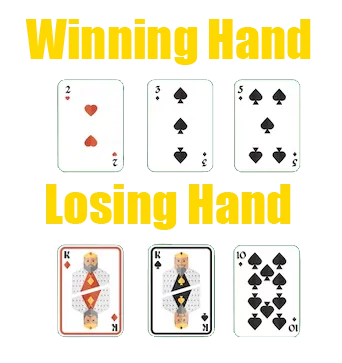
Muflis flips the traditional Teen Patti hand rankings, offering a unique challenge for players. In this variation, the lowest-ranking hand wins, which means that typical winning combinations like pairs, flushes, or trails (three-of-a-kind) are now considered weak. For instance, a hand like 2-3-5 (unsuited) would triumph over a pair of Aces.
This variation encourages players to aim for weaker hands, requiring them to completely rethink their usual strategies. Bluffing also takes on a different meaning in Muflis, as players might pretend to have a strong hand (which is undesirable) to force opponents to fold. This twist creates an engaging and unpredictable dynamic, making it a favorite for players who enjoy strategy-heavy gameplay with a psychological edge.
2. AK47
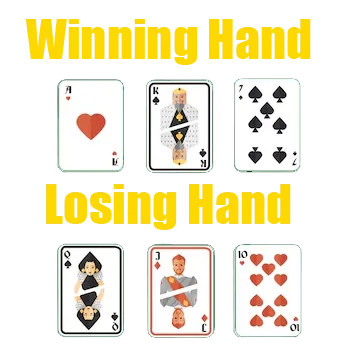
AK47 introduces an exciting element of unpredictability by designating Aces, Kings, Fours, and Sevens as jokers. With these wild cards in play, players have significantly more opportunities to form powerful combinations, such as straights, flushes, or even a trail with the help of jokers.
The abundance of jokers in this variation ensures that nearly every hand has potential, leading to more competitive rounds and higher stakes. However, the game requires players to pay close attention to the distribution of jokers and carefully analyze their opponents’ betting patterns to determine the strength of their hands. AK47 is especially popular among players who enjoy high-action games with frequent surprises.
3. 999
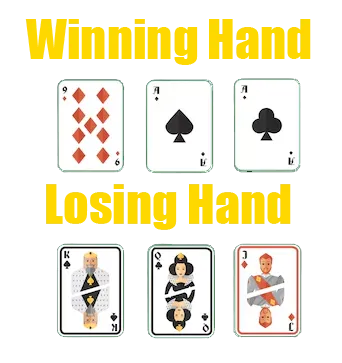
The 999 variation shifts the focus from traditional hand rankings to numerical values, with the goal of forming a hand whose total value is closest to 9-9-9. Face cards (King, Queen, Jack) are valued at zero, and the sum of the cards is calculated modulo 10. For example, a hand with 4, 5, and 10 would have a total of 9 (4 + 5 + 0).
This variation emphasizes numerical strategy, requiring players to calculate probabilities and make decisions based on the value of their hand. Since the usual rankings like pairs or flushes don’t matter, 999 introduces a fresh and cerebral aspect to Teen Patti. Players who enjoy mathematical challenges and a break from traditional gameplay will find this variation highly engaging.
4. Joker Hunt
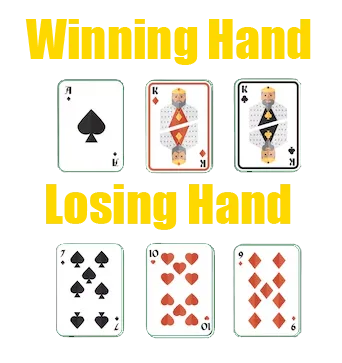
Joker Hunt combines elements of strategy and chance, making it one of the more interactive Teen Patti variations. Each player is initially dealt three cards, and several additional cards are placed face-up on the table, acting as potential jokers. Players can then exchange one or more of their cards with the face-up jokers to form the strongest possible hand.
This variation demands strategic thinking, as players must decide which cards to swap and when to stop, balancing the risk of losing valuable cards with the opportunity to create stronger combinations. Observing other players’ moves is crucial in Joker Hunt, as it can provide clues about their potential hands. The dynamic nature of this variation ensures that no two rounds are ever the same, keeping players on their toes throughout the game.
Poker-Style & Multi-Card Variations
5. Stud
Borrowing its mechanics from Stud Poker, this variation of Teen Patti introduces a blend of face-up and face-down cards dealt over multiple rounds. Each player begins with a set number of face-down cards, and additional cards are revealed one by one in subsequent betting rounds.
Stud demands careful observation and strategic decision-making, as players must assess their opponents’ visible cards while considering the unknown elements of their own hands. Bluffing becomes particularly important, as players can attempt to mislead opponents based on the strength of their face-up cards. The gradual revelation of information adds suspense and depth to the gameplay, making Stud a favorite for those who enjoy long-term strategy and tactical play.
6. Community (3-Card Hold'em)
In the Community variation, each player is dealt two private hole cards face-down, while three shared community cards are dealt face-up in the center of the table over consecutive betting rounds. Players combine their two private cards with one of the community cards - or one private card with two community cards - to build the strongest three-card Teen Patti hand. Because everyone shares the board, reading how the center cards help your opponents' potential trails or pure sequences is far more important than blind betting.
7. Draw
In the Draw variation, players are initially dealt a full three-card hand but have the opportunity to exchange one or more cards with fresh ones from the deck. For example, if a player is dealt 2♠, 2♦, and 9♣, they might exchange the 9♣ in the hope of completing a three-of-a-kind with another 2.
Strategic Insights:
- This variation combines skill and chance, as players must decide whether to take the risk of exchanging a card.
- Observing opponents’ behavior during the exchange phase can provide valuable clues about their potential hands.
8. High-Low Split
In High-Low Split, the pot is divided between the player with the highest-ranking hand and the one with the lowest-ranking hand. Before the game begins, players can declare whether they are aiming for a high or low hand, but they must stick to their declaration throughout the round.
For example:
- Player 1: Declares "High" and forms a flush (9♦, 10♦, Q♦).
- Player 2: Declares "Low" and forms 2♠, 3♣, 5♦.
The pot is split equally between the two players.
Strategic Insights:
- Players aiming for low hands can leverage bluffing to confuse opponents aiming for high hands.
- The dual objective creates a dynamic betting environment, as players compete on two fronts.
9. Kiss-Miss-Bliss
This variation adds virtual jokers to the game based on specific card combinations:
- Kiss: Two consecutive cards (e.g., 6 and 7).
- Miss: Two cards with one missing in sequence (e.g., 6 and 8).
- Bliss: A pair of the same rank (e.g., two 9s).
For example, if a player is dealt 6♠, 7♠, and 10♦, the 6♠ and 7♠ form a "Kiss," acting as a joker that can replace any card to create a stronger hand.
Strategic Insights:
- The ability to create virtual jokers opens up creative ways to form high-ranking hands.
- Players must focus on recognizing these combinations quickly to maximize their chances of winning.
10. Cobra
In the Cobra variation, each player is dealt one card face-down, which they place on their forehead without looking at it. This means players can see everyone else's card except their own.
For example:
- Player 1 places a K♦ on their forehead.
- Player 2 sees the K♦ but only has a 9♠ visible.
Strategic Insights:
- Bluffing and reading opponents are critical, as players bet based on their assumptions about their own card.
- The game is fast-paced, and the psychological challenge makes it one of the most entertaining variations.
11. In-Out
In In-Out, players can opt to stay in or fold after every round of betting. Players who fold have the flexibility to rejoin the game in later rounds by paying a penalty.
Example:
- Round 1: Player 1 folds, but Player 2 continues.
- Round 3: Player 1 re-enters by paying the penalty and wins with a flush.
Strategic Insights:
- This variation allows for tactical exits and re-entries, making it ideal for cautious players.
- Players can use folding as a strategy to observe opponents’ gameplay and re-enter when the odds are favorable.
12. Auction
In the Auction variation, cards are dealt face-down, and players bid on these cards to form their hands. The highest bidder wins the card, and the auction continues until each player has a full hand.
Example:
- A Q♠ is up for auction. Player 1 bids $5, while Player 2 bids $10 and wins the card.
Strategic Insights:
- Resource management is key, as players must decide how much to spend on each card.
- Observing opponents’ bidding behavior can provide hints about the strength of their developing hands.
Number, Math & Action Variations
13. Rotating Jokers
In Rotating Jokers, the role of the joker card changes after each round. For example, in the first round, all Queens might be jokers, while in the next round, all 5s become jokers.
Strategic Insights:
- Players must adjust their strategies dynamically as the jokers change.
- Anticipating how the next joker might affect the strength of their hand is critical for success.
14. Buying Jokers Seen and Unseen
This variation allows players to purchase jokers, which can be either visible (seen) or hidden (unseen). Seen jokers are visible to all players, while unseen jokers remain a secret until revealed by the buyer.
Example:
- A player buys an unseen joker and reveals it later to form a trail (three-of-a-kind).
Strategic Insights:
- Buying seen jokers can intimidate opponents, while unseen jokers add an element of surprise.
- Players must manage their chips wisely, balancing their spending on jokers with their overall strategy.
15. Temperature
In the Temperature variation, players declare a specific number, known as the "temperature," before the game begins. The goal is to create a hand with a total card value as close as possible to this number. For instance, if the temperature is 15, a hand of 5♦, 4♠, and 6♥ would be ideal, as the total is exactly 15.
Example Scenario:
- Player 1 declares 15 and has 7♦, 8♠, and Q♥ (Q counts as 0), totaling 15.
- Player 2 also declares 15 but holds 6♣, 5♦, and 3♠, totaling 14.
Player 1 wins as their hand is closer to the declared temperature.
Strategic Insights:
- This variation introduces a mathematical aspect, encouraging players to calculate hand values and decide their moves carefully.
- Players must balance the risk of taking higher-value cards against the potential to overshoot the target temperature.
16. Closest to 555
Similar to the 999 variation, the Closest to 555 game requires players to form a hand with a total value closest to 5-5-5. The hand values are calculated modulo 10, and face cards are worth zero.
Example Scenario:
- Player 1: 4♦, 5♠, and 6♥ → Total = 15 (Modulo 10 = 5).
- Player 2: 7♣, 8♦, and Q♠ → Total = 15 (Modulo 10 = 5).
In case of a tie, secondary criteria like suits or betting patterns can determine the winner.
Strategic Insights:
- Players must evaluate card combinations carefully, aiming for exact or near-exact matches.
- The simplicity of the rules makes it accessible to all players, while the numerical challenge keeps it engaging.
17. Discard One
In Discard One, players receive four cards and must choose one to discard, playing the round with the remaining three. For example, a player with 5♠, 5♦, 7♣, and K♥ might discard the King to retain a pair and a high kicker.
Strategic Insights:
- Choosing the right card to discard is crucial and can significantly impact the outcome.
- This variation adds an element of decision-making that requires both skill and foresight.
18. Plus Sign
In the Plus Sign variation, players are dealt five cards and must form two separate hands:
- A three-card hand that follows traditional Teen Patti rules.
- A two-card hand that is compared separately.
Example Scenario:
- A player receives 4♠, 4♦, 4♥, K♣, and J♦.
- They form a trail (three-of-a-kind) with the 4s for the three-card hand.
- Their two-card hand is K♣, J♦, which is judged based on its high-card value.
Strategic Insights:
- Players must think strategically about how to distribute their cards between the two hands to maximize their chances of winning both.
- Bluffing can play a significant role, especially in the two-card hand.
19. Sudden Death
In Sudden Death, players hold a stack of cards and drop them one by one until someone calls "stop." The player with the highest card revealed at that point wins.
Example Scenario:
- Player 1 reveals 8♣.
- Player 2 drops two cards, revealing K♥ on the third.
- Player 2 wins as the King is the highest card.
Strategic Insights:
- This is a fast-paced variation with minimal strategy, making it exciting and unpredictable.
- Players must decide when to call "stop," balancing risk and reward.
20. 1942 Love Story
Named after the classic Bollywood film, 1942 Love Story is a popular wildcard variant where all Aces (representing 1), 9s, 4s, and 2s act as jokers. With 16 wildcards in a 52-card deck—just like AK47—almost every deal produces a Trail or Pure Sequence. Holding a natural pair alongside any 1, 9, 4, or 2 automatically upgrades your hand to a three-of-a-kind, making high trails the realistic baseline for winning a showdown.
Wildcard & Joker Variations
21. Hukam (Command Joker)
Hukam is one of the most widely played Teen Patti variations in India. After dealing three cards face-down to each player, the dealer pulls one random card from the deck and places it face-up in the center of the table. Every card of that same rank (across all four suits) becomes a wild joker for that round. If a 7♠ is turned up as the Hukam card, all four 7s act as wildcards.
22. Lallan Kallan
In Lallan Kallan, the deck is divided by color:
- Kallan (Black) cards (Spades and Clubs) act as jokers.
- Lallan (Red) cards (Hearts and Diamonds) follow normal rules.
Example Scenario:
- A player holds 5♠, 9♠, and 10♦. The 5♠ and 9♠ are black jokers, making it easy to form a trail or straight.
Strategic Insights:
- Players must adapt their strategies based on the distribution of black and red cards.
- This color-based mechanic adds a layer of visual and strategic complexity to the game.
23. One-Eyed Jack
In One-Eyed Jack, only the Jacks with a single visible eye-Jack of Spades and Jack of Hearts-are designated as jokers. This creates a visually engaging dynamic, as players must pay special attention to these specific cards. For example, a hand with Jack of Spades, 7♦, and 9♣ can leverage the Jack as a joker to complete a straight.
Strategic Insights:
- Players holding One-Eyed Jacks have a significant advantage, so spotting them early is crucial for strategic betting.
- Observing opponents’ reactions to potential jokers can help gauge the strength of their hands.
24. King Little
King Little turns traditional hand rankings upside down by making Kings the lowest-value cards. For instance, a hand with K♦, 2♠, and 3♥ would rank lower than a hand with A♠, 4♦, and 6♣. This reversal encourages players to rethink their usual approach to hand valuation.
Strategic Insights:
- Kings lose their usual dominance, requiring players to focus on forming strong combinations without relying on high-value cards.
- Bluffing becomes more impactful, as players might use their Kings to mislead opponents into overestimating their hand strength.
25. High Wild
In the High Wild variation, the highest card in each player’s hand acts as a joker. For example, in a hand with 7♦, 9♠, and K♥, the King becomes the joker, allowing it to replace any card needed for a stronger combination.
Strategic Insights:
- Players must balance the value of their joker against the need to form strong combinations.
- This variation introduces an unpredictable element, as every hand has the potential to transform significantly.
26. Pack Jack
In Pack Jack, all Jacks in the deck are designated as jokers. This increases the likelihood of forming high-ranking combinations, such as straights or flushes. A hand with Jack♣, 7♦, and 9♠, for example, could use the Jack as a wildcard to create a straight or flush.
Strategic Insights:
- The abundance of jokers raises the stakes, as players are more likely to have competitive hands.
- Betting strategies must adapt to the increased frequency of strong hands, making bluffing and observation critical.
27. Lower Joker
In the Lower Joker variation, the lowest card in each player’s hand becomes a joker. For instance, in a hand with 3♦, 7♠, and 10♥, the 3 acts as the joker, potentially turning an otherwise weak hand into a winner.
Strategic Insights:
- Players with traditionally weaker cards gain a significant advantage, requiring a shift in strategy.
- Observing how opponents bet on low-value cards can reveal their confidence in holding a powerful joker.
28. FourxFour
In FourxFour, players are dealt four cards and must form two hands of two cards each. Both hands are compared separately to opponents’ hands, and the player who wins the majority of comparisons is declared the winner.
Example Scenario:
- A player with 4♠, 4♦, 7♣, and 9♥ might split the pair of 4s into one hand and the 7♣, 9♥ into another, aiming for balance.
Strategic Insights:
- This variation requires players to distribute their cards thoughtfully, ensuring both hands are competitive.
- Bluffing can be employed to mislead opponents about the strength of the primary or secondary hand.
29. King Joker
In King Joker, only Kings are designated as jokers, adding exclusivity to their role. A hand with K♠, 7♥, and 8♣ could use the King to complete a straight, while a hand without a King would need to rely on traditional combinations.
Strategic Insights:
- Kings become highly valuable, and players holding them can confidently bet more aggressively.
- Observing opponents’ behavior around potential Kings is key to predicting their hand strength.
30. Color Color
In the Color Color variation, players must focus on creating hands with cards of the same suit. Only flushes and straight flushes are considered valid hands, making the game both challenging and rewarding. For example, a hand with 6♥, 8♥, and 10♥ would qualify as a valid flush, while a mixed suit hand would not.
Strategic Insights:
- Players must be strategic about betting and bluffing, as invalid hands offer no chance of winning.
- Observing opponents’ reliance on suited cards can provide insights into their strategies.
31. Katti (Cut)
Also known as Cut, in this variation, the deck is cut before dealing, and the card revealed from the cut determines the joker for that round. For example, if the cut reveals a 5♦, all 5s in the deck act as jokers.
Strategic Insights:
- The randomly assigned joker adds an element of unpredictability, requiring players to adapt their strategies in real-time.
- Observing how players bet after the joker is revealed can help predict their hand strength.
32. Single Joker
In Single Joker, only one card is designated as the joker for the entire game, and its identity is declared at the start. For instance, if the Queen of Hearts is the joker, all Q♥ cards serve as wild cards.
Strategic Insights:
- Players must adapt their gameplay to maximize the value of the single joker.
- Bluffing can be used effectively, as opponents may overestimate the impact of the joker on a player’s hand.
33. Three Jokers
In Three Jokers, three cards are declared as jokers at the beginning of the game. These jokers significantly enhance the probability of forming high-ranking hands, such as straights, flushes, and trails, leading to more intense competition. For example, if 3♣, Q♦, and K♠ are the declared jokers, a player holding 7♠, 8♠, and Q♦ could use the Q♦ as a joker to form a straight flush or any other combination.
Strategic Insights:
- With more jokers in play, players need to be cautious of overestimating the strength of their hand, as opponents are likely to have equally strong combinations.
- Bluffing becomes more nuanced, as the likelihood of multiple players having competitive hands increases.
- Observing opponents’ betting patterns and identifying their reliance on jokers can help make better-informed decisions.
34. Two-Low Joker
In Two-Low Joker, the two lowest-ranking cards in a player’s hand are treated as jokers. For example, in a hand containing 2♠, 5♦, and 9♣, the 2♠ and 5♦ become jokers. This twist adds an intriguing layer of strategy, as traditionally weak cards now hold immense value.
Strategic Insights:
- Players must rethink their approach, as holding low-value cards becomes advantageous.
- Bluffing is amplified in this variation since opponents might misjudge a hand containing low cards.
- Players must be careful about revealing patterns in how they treat low cards to avoid tipping off their strategy.
Example Scenario:
- Player 1 holds 3♥, 5♠, and 10♦. The 3♥ and 5♠ are jokers, enabling them to create a trail with 10♦.
35. Chatai (Matching Board)
Popularized by major mobile Teen Patti apps, Chatai places four initial cards face-up on the board. Players take turns matching their dealt cards with the board cards to form standard three-card combinations (Pairs, Sequences, Colors, or Trails), scoring points immediately based on the strength of each combination they complete before the deck runs out.
36. Revolving Joker (Cruiser)
In Revolving Joker, players receive three cards face-down while the dealer lays out three to five community cards face-down in the center. At each betting street, one center card is flipped face-up, and its rank becomes the active wild joker - replacing the joker from the previous street. A hand that was a Trail on the second round can suddenly revert to a High Card on the final flip, forcing players to constantly re-evaluate the pot.
37. Number Sequence Joker
In Number Sequence Joker, a specific numerical sequence (e.g., 2, 3, 4) is declared as jokers at the start of the game. For example, if the sequence 2, 3, 4 is chosen, all cards with these ranks become wild cards, regardless of their suits. A player with 2♠, 7♦, and 4♣ could use the 2♠ and 4♣ as jokers to create a high-ranking hand.
Strategic Insights:
- Players must pay attention to the declared sequence and adjust their betting strategies accordingly.
- Observing how opponents use jokers from the sequence can provide valuable information about their hand strength.
Example Scenario:
- If the declared jokers are 2, 3, and 4, a player holding 3♦, 6♥, and 8♣ can use the 3♦ to complete a straight (6♥, 7♠, and 8♣).
38. Under Over
In Under Over, players aim to form a hand with a total value that is either under a specified number (e.g., 15) or over a higher threshold (e.g., 21). For instance, if the thresholds are 15 and 21, a hand totaling 14 would qualify as "under," while a hand totaling 22 would qualify as "over."
Strategic Insights:
- Players must calculate hand values carefully and decide early on whether to aim for the under or over threshold.
- This variation creates two potential winning conditions, encouraging diverse strategies and more dynamic gameplay.
Example Scenario:
- Player 1’s hand totals 13 (under 15), while Player 2’s hand totals 23 (over 21). Both qualify for their respective thresholds, leading to a tie or a split pot.
39. Low High Joker
In Low High Joker, the lowest and highest cards in each player’s hand act as jokers. For example, in a hand containing 3♣, 7♦, and K♠, the 3♣ and K♠ become jokers. This creates a balanced dynamic where players benefit from both extremes of their hand.
Strategic Insights:
- Players must consider how to use their two jokers to maximize their hand’s potential while predicting opponents’ strategies.
- This variation rewards players who can effectively balance offensive and defensive strategies, leveraging both jokers in creative ways.
Example Scenario:
- A hand of 2♠, 8♥, and A♦ has two jokers (2♠ and A♦), which can be used to complete a straight (7, 8, and 9) or create a flush.
40. Odd-Even Split
In Odd-Even Split, cards are divided into two groups: odd-ranked cards (e.g., 3, 5, 7) and even-ranked cards (e.g., 2, 4, 6). One group, such as all odd-ranked cards, is declared as jokers at the beginning of the game. For example, if odd cards are jokers, a hand containing 3♠, 5♦, and 10♥ would use the 3♠ and 5♦ as jokers to strengthen its value.
Strategic Insights:
- Players must quickly adapt their strategies based on the distribution of odd or even cards in their hand.
- Bluffing becomes more complex, as players might try to disguise their reliance on jokers.
Example Scenario:
- If odd cards are jokers, a player holding 3♦, 6♥, and 7♠ can use the 3♦ and 7♠ as jokers, potentially forming a flush or straight.
41. Royal Joker
In the Royal Joker variation, all face cards-Kings, Queens, and Jacks-act as jokers. This significantly increases the frequency of high-ranking hands, such as flushes, straights, and trails, adding a layer of competitiveness to the game. For example, a hand with Q♦, 10♠, and 9♣ could use the Q♦ as a joker to complete a straight.
Strategic Insights:
- With more jokers in play, players must carefully assess the strength of their hands relative to their opponents'.
- Bluffing is more challenging in this variation, as strong hands are more common.
Example Scenario:
- A player with K♠, 7♦, and Q♣ can use both the K♠ and Q♣ as jokers, creating a trail or a flush, depending on the situation.
42. Sequence Joker
In Sequence Joker, any card that completes a straight sequence in a player’s hand automatically becomes a joker. For example, if a player holds 4♠, 5♦, and 7♣, the 6 (which completes the sequence) is considered a joker.
Strategic Insights:
- This variation rewards players who can create straights, making card arrangement a key aspect of gameplay.
- Players must think ahead to determine how to optimize their sequence potential.
Example Scenario:
- A hand of 3♦, 4♣, and 6♥ uses the 5 as a joker to complete the sequence, enabling a straight.
43. Married Joker
In Married Joker, only married pairs-a King and Queen of the same suit-act as jokers. For example, holding K♠ and Q♠ would activate the joker effect, allowing these cards to substitute for others. This variation is challenging because it relies on specific combinations, but the rewards for securing such a pair are significant.
Strategic Insights:
- Players must focus on obtaining suited Kings and Queens, which adds an extra layer of difficulty.
- Bluffing is highly effective, as opponents might misinterpret the strength of a hand without a visible married pair.
Example Scenario:
- A player with K♥, Q♥, and 9♦ uses the King and Queen as jokers to form a flush or a trail.
44. Blind Joker
In Blind Joker, the joker is not revealed to the players until after the first round of betting. This creates suspense and encourages strategic bluffing, as players must decide whether to bet, raise, or fold without knowing the joker's identity.
Strategic Insights:
- Players need to rely on psychological tactics and observational skills, as the suspense of the hidden joker makes every decision crucial.
- Once the joker is revealed, its impact can drastically change the dynamics of the game.
Example Scenario:
- After the first betting round, the 10♣ is revealed as the joker. A player holding 10♦, 7♠, and 8♥ can use the joker to form a straight or flush.
45. Wild Random Joker
In Wild Random Joker, a single joker is randomly selected from the deck before the game begins. This joker remains constant throughout the round and is typically drawn by the dealer. For example, if 5♠ is drawn as the joker, any 5 in the game can be used as a wildcard.
Strategic Insights:
- Players must adapt quickly to the randomly assigned joker, as its rank or suit might significantly alter their strategy.
- Observing how opponents react to the joker can reveal valuable insights into their hands.
Example Scenario:
- If the 9♦ is chosen as the joker, a hand containing 9♠, 7♣, and 8♥ can leverage the joker to complete a straight or flush.
46. Hidden Joker
In Hidden Joker, only the dealer knows the joker’s identity, and players must deduce it based on gameplay and revealed hands. This adds a layer of strategy, as players can use deduction to inform their decisions.
Strategic Insights:
- Players must pay close attention to how their opponents play their hands to deduce the joker.
- Bluffing becomes more impactful, as players can pretend to know the joker while misleading their opponents.
Example Scenario:
- The dealer secretly designates 2♥ as the joker. A player holding 2♠, 5♦, and 9♣ realizes the joker’s identity after observing other players’ actions and uses it to their advantage.
47. Triple Joker
In Triple Joker, each player is dealt a hand containing one guaranteed joker along with their standard cards. This ensures that every player has the opportunity to create strong combinations, making the gameplay competitive and intense.
Strategic Insights:
- Since every player has a joker, the emphasis shifts to how effectively players can use their joker to form the best possible hand.
- Bluffing becomes more nuanced, as opponents might underestimate or overestimate the impact of a joker in a player’s hand.
Example Scenario:
- A player with 3♦, 6♣, and a joker uses the joker to create a trail with two 6s or a straight by adding a 4 or 5.
Online Casino Teen Patti Variations
48. Teen Patti 1 Day (One Day)
Created by studios like Ezugi and Live88, One Day Teen Patti is a fast-paced head-to-head live dealer format where you bet on Player A or Player B rather than playing a single seat. Uses standard hand rankings with Back and Lay betting mechanics borrowed from cricket exchanges, offering one of the highest return-to-player rates in the niche (up to 98.36% RTP).
49. Teen Patti 20-20
Designed for rapid 20-second rounds by providers like SA Gaming and Evolution, Teen Patti 20-20 deals two three-card hands face-up (Player A vs. Player B). Alongside the main winner bet, it features popular optional side bets like Pair Plus and the 6-Card Bonus, which pays up to 1000:1 if all six dealt cards combine to form a five-card Poker Royal Flush.
50. Bet on Teen Patti
Built by Ezugi and BETER Live, Bet on Teen Patti lets unlimited online players wager on a live studio deal across multiple betting phases. Odds update dynamically as each of the six cards is revealed one by one, allowing you to hedge your bet or back a comeback mid-hand.
51. Classic Live Dealer Teen Patti (PvE)
Played on Evolution and Playtech tables, this format pits your three-card hand directly against the Dealer. You place an initial Ante bet, view your three cards, and decide whether to fold or place a matching Play bet. The dealer requires a Queen-high or better to qualify, with optional Pair Plus and 3+3 Bonus side bets available on every round.